Micro Luxuries That Support Daily Routine
KDMS Developers design buildings as extensions of the home. The value of a feature is measured by how often it helps a family.
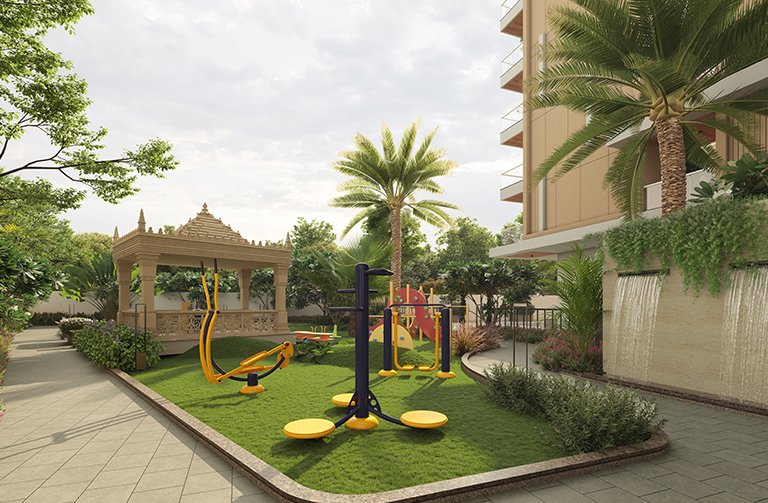
Children’s play zones: Children’s play areas, activity rooms, skating zones, daycare and tuition spaces keep childhood energy within the community. Parents gain valuable time and peace of mind knowing their children are safely engaged in activities within the community.
Waiting lounges and quiet corners: Elder-friendly paths, temples, zen gardens, and shaded seating protect independence. These buffer spaces lower noise and crowding during peak hours.
Dedicated areas for focus: Library rooms, study zones, coworking areas, and a full conference room, providing overflow space for concentration. Work and academics do not spill into shared family areas.
Health and Movement: Gym facilities, yoga and meditation decks, jogging tracks, indoor courts, swimming, and recreation rooms make movement part of daily paths.
Shared Spaces That Absorb Pressure: Entertainment rooms, cafés, theatres, and gathering halls keep leisure local. Quiet lounges, reception buffers, guest rooms, grocery access, medical spaces, and laundromats remove the background effort required to run a household.
Vertical Access to Green Space: Three levels of gardens spread greenery vertically through the building, giving regular visual and physical relief even in a high-rise setting. Residents encounter open space as part of routine movement rather than as a distant destination.
In KDMS Skywalk, we placed these spaces along natural circulation so families encounter them without planning special trips. The building quietly supports habit formation. That is the real micro luxury. It turns effort into routine.
Psychology of Space Inside the Home
Inside the apartment, calm is created through proportion and light. Acoustic separation allows simultaneous work calls and study time. Visual privacy prevents constant interruption. For professionals evaluating modern family apartments, this psychological stability matters more than decoration. A home that absorbs stress keeps relationships intact.
KDMS Skywalk planning extends this logic. Shared infrastructure is treated as emotional overflow space. When the flat feels full, the building offers relief without leaving the community. That balance is what makes comfortable living flats sustainable over the years.
Infrastructure Scaled To Resident Load
In residential planning, the per flat amenity ratio works much like a loading factor. It measures how much shared infrastructure is available relative to the number of homes it serves. In many high-density projects, amenities are minimised to increase sellable area, which raises pressure on lifts, corridors, and shared zones.
When shared infrastructure is underscaled, families start adapting in ways that reduce quality of life. Parents avoid the play area because it feels packed. Elders stop going downstairs because the seating is always occupied. Residents shift workouts to off-hours because the gym is always full. The building technically has amenities, but they become unusable during the time windows when families actually need them.
When shared infrastructure is properly scaled, the opposite happens. Access becomes predictable. This planning ensures that shared spaces never feel overcrowded.
At KDMS Skywalk, a 12 to 13% per flat amenity ratio means infrastructure is matched to the number of residents, so families are not competing for access.
The Neighbourhood Is A Part of Everyday Living
Connectivity now protects time and energy.
Patrakar Colony has matured into a neighbourhood where schools, healthcare, and daily essentials sit close to home, as Cambridge Court is just 5 minutes away, St. Anselm’s School, Mansarovar Plaza and Saket Hospital are within 10 minutes, HCG Hospital is 13 minutes, Modern School is 14 minutes, and even the airport is reachable in about 20 minutes.
Short distances reduce decision fatigue. For families considering a flat for sale in Jaipur, location is no longer just convenience. It is mental efficiency.
A resilient apartment integrates flexible design, coworking infrastructure, and access to green space within a connected neighbourhood. When these elements align, the home stops feeling temporary.
It becomes a structure that supports everyday life reliably. That is what a modern family home must do.
Designing for the Next Ten Years
Families buying a flat for sale in Jaipur are investing in continuity. We plan structural systems and shared spaces, assuming children will grow, careers will shift, and parents will age. Micro luxuries are evidence of long-term thinking. They show that the building anticipates change rather than reacting to it.
A well-designed residential project should not demand adaptation from the family. It should adapt quietly to the family. That is the standard we design for.
It is a structural choice that delivers everyday Xtra benefits. A home with everything Xtra.

